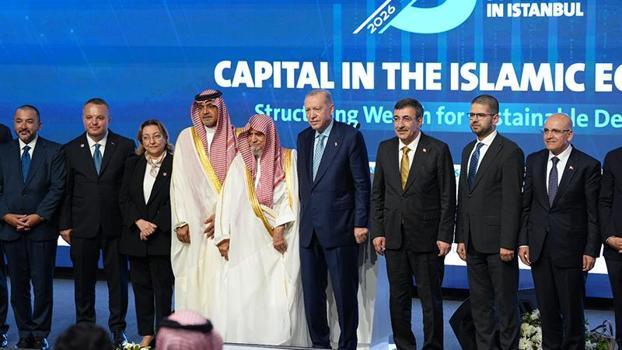
‘Economic power struggles are reshaping the global order’
Speaking at the fifth panel of the International Economic Summit (UEZ 2026), Zurich Insurance Group Türkiye CEO Yılmaz Yıldız emphasized rising geopolitical tensions, particularly the Iran conflict, stating; “We see that the United States is acting to reestablish its power. Within this paradigm shift, Iran is just a detail in the bigger picture. The core issue is centered on the United States regaining its economic strength.”
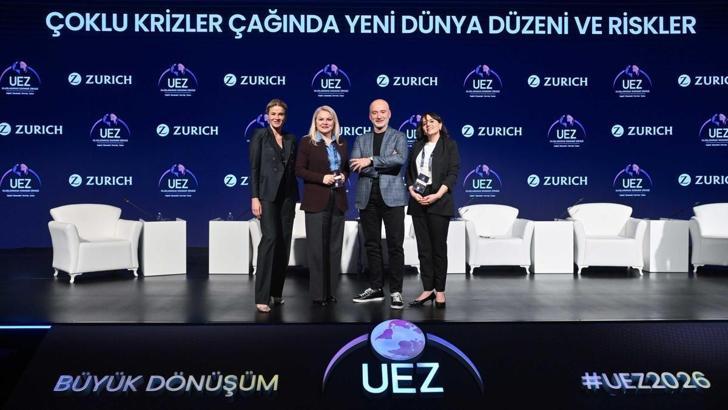
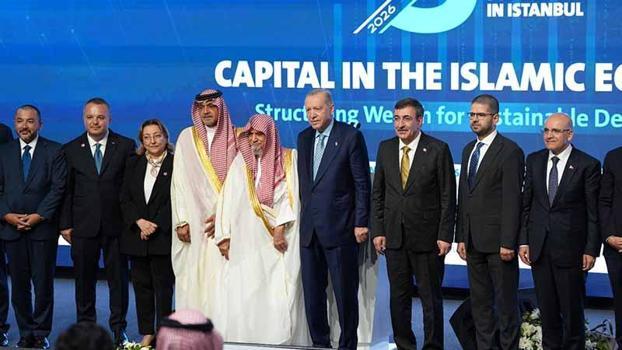
Organized since 2012 by Capital, Ekonomist, and Start Up magazines, the International Economic Summit (UEZ 2026) is being held for the 15th time this year, bringing together distinguished politicians, business leaders, and academics from Türkiye and around the world.
This year’s summit is held under the theme: ‘The Great Transformation: A Compass for the Transition to a Resilient and Sustainable Global System.’ The main sponsor is Tera Finance Group.
The fifth panel of the summit was titled ‘The New World Order and Risks in the Age of Multiple Crises.’ It was moderated by journalist Ahu Tanrıkulu and sponsored by Zurich Insurance.
Tanrıkulu noted that the world is going through a difficult period amid ongoing conflicts, emphasizing that recent crises have not only economic consequences but may also lead to radical political changes. She stated; “If the old world is dying, we must seek answers to where we are heading.”
‘A GENERAL SENSE OF PESSIMISM PREVAILS’
Yılmaz Yıldız discussed global risk outlooks, saying; “We publish a global risks report every year, and we have been doing so for 17 years. We see that most of these risks are predictable. Geo-economic fragmentation, extreme weather events, misinformation, and social polarization were all anticipated risks for this year. However, when we ask what is permanent and what is temporary, there is a general sense of pessimism-90% are highly pessimistic.”
Recalling expectations of a multipolar and crisis-driven world, Yıldız continued; “The critical point is this: the order established after World War II is changing. Concepts such as preventing another war, ensuring economic integration, and establishing institutions to regulate it were dominant. After World War II, the U.S. accounted for 50% of the global economy; by 2024, this has dropped to 24%. We see that the U.S. is acting to reestablish its power. Within this paradigm shift, Iran is just a detail in the larger picture. The main issue is the restoration of U.S. economic strength. To understand what will happen in the world, I believe we should look at developments in artificial intelligence and U.S. domestic politics.”
‘THE STRAIT OF HORMUZ CRISIS IS LEADING TOWARD MAJOR CHANGE’
Prof. Deniz Ülke Kaynak, Dean of the Faculty of Humanities and Social Sciences at Üsküdar University, stated; “The outbreak of war and subsequent ceasefires are just small parts of a larger picture. Let’s also consider the consequences of climate change. We are living in an era of crises. At an economic summit, we are discussing politics-this itself shows the nature of transformation. The 21st century is the century of global crises. It began with 9/11. The rise of geopolitics was not anticipated. Military expenditures have increased significantly. All crises must be read as a whole. During the pandemic, we saw how the state can exert influence over our bodies. The Strait of Hormuz crisis may appear as an oil crisis, but it is heading toward a major transformation. We are seeing signals of the collapse of the petrodollar system. A new era will emerge in which energy and logistics routes will be reshaped. We are moving toward a point where states will intervene in all areas.”
‘CHINA’S RISE HAS STARTED TO CAUSE CONCERN’
Prof. Dr. Evren Balta from Özyeğin University’s Department of International Relations stated; “Looking at the Iran crisis, for example, Iran does not have military superiority against the U.S. and Israel. However, it leveraged the Strait of Hormuz and played for time by exploiting the weaknesses of the opposing side. We are going through an energy transition, and all these developments create winners and losers. What does the transformation of American power mean? We are talking about a transformation of hegemonic power. The key question is: who will establish the global order? This question remains unanswered—we are in a transitional period. In the old order, the U.S. played roles in production, consumption, security, and finance. Later, production shifted to Asia. The U.S. remained a consumer and began running deficits. The middle class shrank, and China’s rise became a concern. China started reducing its holdings of U.S. bonds and increasing trade in yuan. There are outcomes the U.S. did not anticipate. The status of the dollar as a reserve currency has been further shaken by the Iran conflict. The limits of American power have also become visible to its adversaries.”