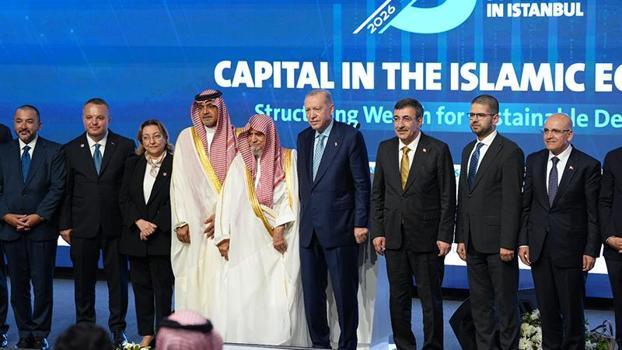
Finance Minister Şimşek: We believe Türkiye is resilient
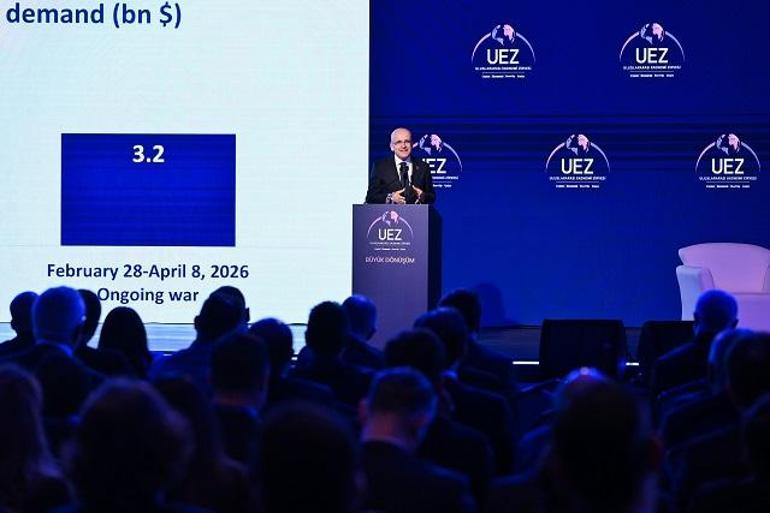
Speaking at the International Economy Summit (UEZ), Minister of Treasury and Finance Mehmet Şimşek said; “The destruction caused by war and its rehabilitation will take some time. Even if a ceasefire continues today, its effects will still be felt. Geopolitically, neither the region nor the world will return to its previous state. We are going through a period of major disruptions. It is not only trade wars, demographic imbalances and their risks, or the climate crisis—rather, we are experiencing a challenging period in many dimensions, which is leading to major global fractures. Wars reflect a ‘period of monsters.’ Until a new world order is established, I hope the United States and China reach a compromise. Wars produce much more lasting and significant consequences compared to other shocks. We believe Türkiye is resilient. We proved this last year, and we will prove it again this year.”
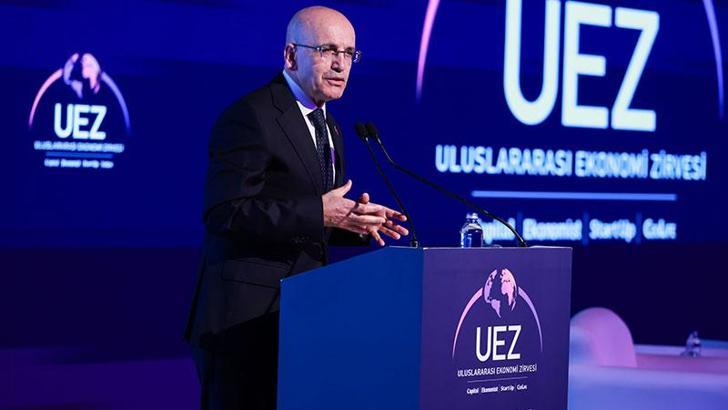
Minister Şimşek attended the International Economy Summit held in Sapanca under the theme ‘The Great Transformation: A Compass for the Transition to a Resilient and Sustainable Global System.’ He stated; “Compared to the past, the current war has a much greater impact on energy markets because the Strait of Hormuz is a critical transit point. We are aware of the magnitude of this shock. Indeed, compared to similar past wars and shocks, the increase in oil prices has been quite significant. There is a fragile ceasefire, and markets are partially reflecting this fragility. The impacts are important. Even if the ceasefire continues, there will unfortunately still be some damage to the global economy and to Türkiye. Inflation expectations are worsening, financial conditions are tightening, and disruptions in supply chains will bring medium-term challenges. We are aware of this.”
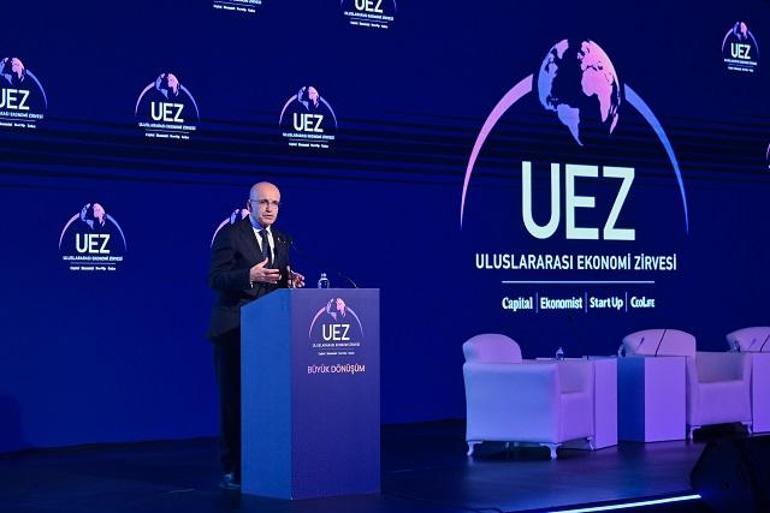
‘WE BELIEVE TÜRKİYE IS RESILIENT’
Şimşek continued:
“The destruction caused by war and its recovery will take time. Even if the ceasefire holds, its effects will persist. Neither the region nor the world will return to how it was before. We are in a period of major disruptions. Not only trade wars, demographic imbalances, and climate crisis-but a multidimensional global challenge. Wars represent a ‘period of monsters.’ Until a new global order is established, I hope the U.S. and China reach a compromise. Wars create far more permanent and larger consequences than other shocks. We believe Türkiye is resilient. We proved it last year, and we will prove it again this year.
In 2025, we faced major shocks both domestically and externally-such as the volatility caused by trade wars, a 12-day war, and a severe drought. Despite all this, we overcame last year’s shocks without significant losses to our economic program. In a way, the program proved itself.”
‘THE PROGRAM IMPLEMENTED SINCE MID-2023 HAS INCREASED TÜRKİYE’S RESILIENCE’
Şimşek stated; “The program we have implemented since mid-2023 has strengthened Türkiye’s resilience. Can we overcome the current challenging period with minimal damage? A recent analysis classified countries into two categories: those that are resilient and those more vulnerable to shocks. Türkiye stands out as a country with relatively low imbalances and limited energy dependency on the Middle East conflict zone. Our dependency on suppliers using the Strait of Hormuz is almost negligible. We import some natural gas from Iran, but since it comes via pipelines, it has not been affected.”
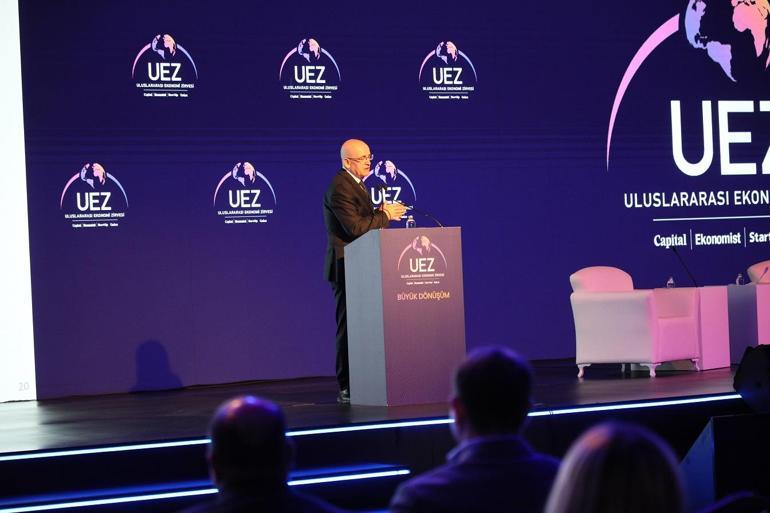
‘WE HAVE ALMOST NO DEPENDENCY ON OIL’
Şimşek said; “We have almost no dependency on oil. This is important because if the war prolongs, many countries will face energy supply security issues-not only in gas and oil but also in their derivatives. Türkiye may have an advantage here due to its limited dependence on that region.
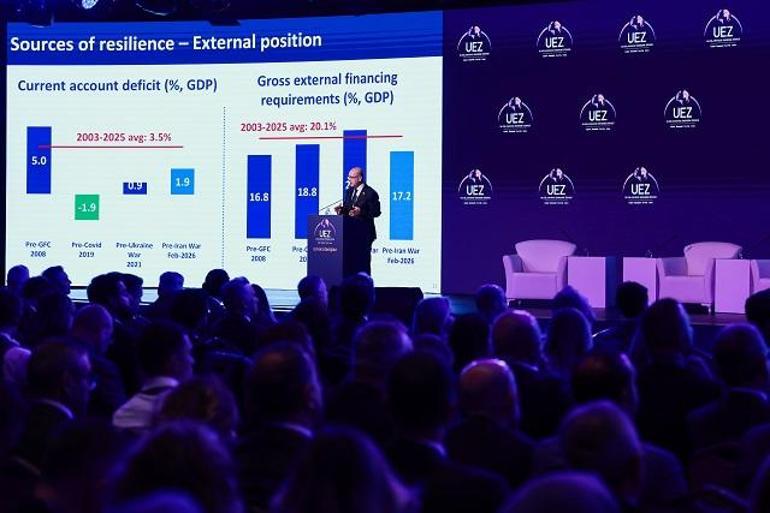
One of the key sources of our resilience is the strength of our fiscal policy. Despite the major earthquake in 2023 and additional pressures such as EYT, we reduced the budget deficit to below 3% of GDP. Like during COVID-19 and the Russia–Ukraine war, our debt-to-GDP ratio remains low. This gives us policy flexibility and allows us to respond more effectively to shocks.
Even in the case of major exchange rate or interest rate shocks, Türkiye’s public debt sensitivity is much lower than in the past. The current account deficit remains an important issue.”
Şimşek continued:
“Increases in oil prices will affect the current account, trade, and tourism. For countries like Türkiye that import oil, the main concern is the current account deficit. However, our starting position was manageable. Even with a potential increase, our gross external financing needs will remain significantly lower than in the past.
When we look at total debt levels—households and the private sector-they are also lower compared to previous periods. Therefore, we expect to overcome this shock with minimal damage.”
Şimşek added; “The banking sector is in a solid position in terms of capital adequacy and non-performing loans. The capital adequacy ratio is around 17%, and the NPL ratio is approximately 2,6%, which is quite reasonable. Although profitability in banking faced challenges in recent years, recovery has begun. Borsa İstanbul has outperformed emerging market indices. Compared to past war periods, demand for foreign currency has been much more moderate. Previously, demand would surge significantly, but this time it is largely linked to gold demand. It is estimated that citizens hold around $640 billion worth of gold ‘under the mattress.’ If this were integrated into the financial system, systemic fragility would be much lower.”
‘OUR BIGGEST CHALLENGE IS THE COST OF LIVING’
Şimşek said; “Last year, due to internal and external tensions, there was a significant capital outflow-around $40 billion. This year, despite the ongoing war, the outflow has remained limited. This shows that our policy responses have reduced concerns. Our priority is to ensure the proper functioning of markets and to keep the program on track. Our biggest priority is combating the cost of living.”
Şimşek concluded:
“According to our medium-term program, inflation may be about 3 points higher. Our oil price assumption was $65; $80 implies a $15 impact. We had forecast the current account deficit below 1,5%, but it may increase by about 1 point—still manageable. Growth was expected at around 4%, but it may be slightly lower. Inflation has dropped from around 65% to 30%. Our target was below 20%, but market expectations have risen to around 25% due to the war.”
PHILIP HAMMOND: THE U.S. REGRETTED NOT RECOGNIZING CHINA’S ECONOMIC POWER
Former UK Foreign and Finance Minister Lord Philip Hammond stated that AI-driven technologies, demographic transformation, and energy security linked to climate change continue to shape the global agenda.
He said; “In 2015, I personally witnessed that the U.S. deeply regretted not recognizing China’s economic power. It was a strategic mistake with significant consequences-especially in access to advanced technologies. But by then, it was too late, as China had already become a major global technology and power center.”
Hammond also noted that post-Ukraine war Europe faces not only decarbonization challenges but also high energy costs and declining competitiveness. He expressed skepticism about achieving net-zero targets by 2050, citing unforeseen consequences and missed opportunities.
GEOPOLITICAL DEVELOPMENTS ARE BECOMING DECISIVE
RePie Investment Holding Chairman Dr. M. Emre Çamlıbel emphasized that economic decisions are increasingly shaped by geopolitical factors. “Inflation, gold prices, exchange rates, oil prices, and supply chains are now largely determined by geopolitical and military developments,” he said.
He added that companies are focusing on three core concepts: resilience, risk mitigation, and diversification.
‘LEADERS SHAPING THE FUTURE ARE COMING TOGETHER’
Sedef Seçkin Büyük, Publishing Director of Capital, Ekonomist and StartUp magazines, stated that UEZ 2026 was designed to analyze global disruptions collectively. She said; “Geopolitical fault lines are deepening, trade blocs are hardening, and technological competition among major powers is turning into a strategic struggle. Growth and profitability are no longer sufficient-resilience, sustainability, and strategic positioning are now key. The issue is no longer whether change will happen, but who will manage it, how, and under what rules. UEZ 2026 is more than a conference-it is a platform for shaping ideas and direction that will define the economic architecture of the next decade.”