‘Türkiye has become a solution country, especially after the pandemic’
ŞÖLEN Executive Board Member and CEO Erdoğan Çoban stated, “Turkish companies are so resilient in the face of global crises that I truly believe this is a major advantage. When we look at both our geography and the surrounding regions, we should leverage this advantage.”
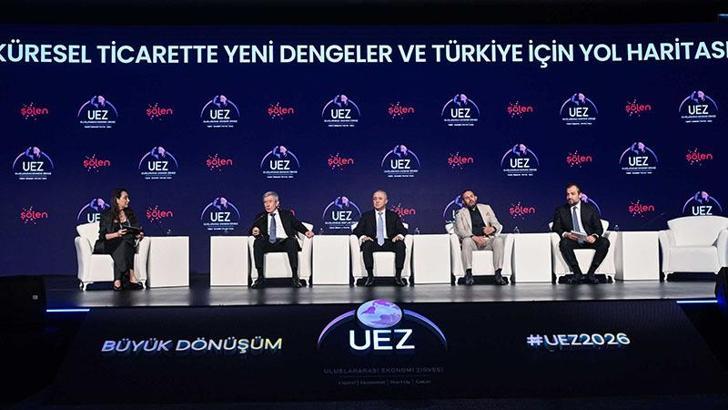
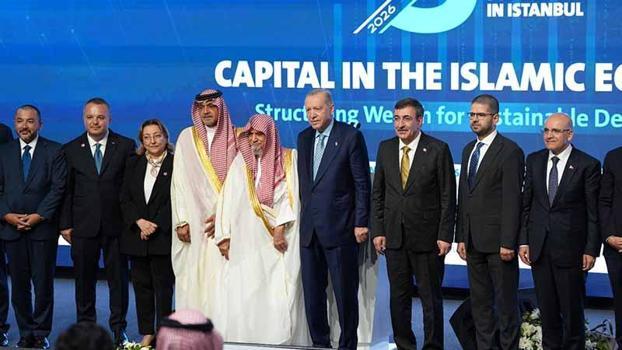
The International Economy Summit (UEZ 2026), organized since 2012 by Capital, Ekonomist and Start Up magazines, is being held for the 15th time this year, bringing together distinguished politicians, business leaders, and academics from Türkiye and around the world.
This year’s summit, held under the theme ‘The Great Transformation: A Compass for the Transition to a Resilient and Sustainable Global System’ is sponsored by Tera Finans Group.
The second panel of the summit, titled ‘New Balances in Global Trade and a Roadmap for Türkiye’ was moderated by Berna Akyüz Öğüt, General Manager and Board Member of LC Waikiki Retail. She addressed global developments and their impact on the Turkish economy.
ŞÖLEN CEO Erdoğan Çoban drew attention to increasing cost pressures and disruptions in global supply chains. Noting that cocoa prices have increased nearly fivefold over the past two years, Çoban said; “Our main raw material, cocoa, has risen from around 2,000 pounds to 10,000 pounds. This represents a serious cost shock for large producers like us. However, we are managing this process effectively. This situation clearly shows that global supply chains are no longer a choice but a necessity in terms of food security.”
Emphasizing that each sector faces its own unique challenges, Çoban highlighted three key advantages for Türkiye in this new era. He noted that Türkiye has a strategic logistical position, stating that while shipment times from Asia to Europe and Africa have extended from 30–45 days to up to 2–3 months due to crises, deliveries from Türkiye can reach the same markets within 2–3 days.
He also stressed that reliability has become as critical as cost and that Türkiye holds a strong position in this regard thanks to international agreements and its geopolitical location. Regarding food security, Çoban stated that Türkiye could serve as a strategic partner, especially as rising protectionism and climate change risks make the issue more critical.
Pointing out the need for Türkiye to develop strategic food agreements with regional countries, Çoban added:
“Turkish companies are extremely strong in the face of global crises, and I see this as a major advantage. Considering both our geography and nearby regions, we must use this advantage. Because, especially after the pandemic, Türkiye has become a solution country. In other words, Türkiye has taken on a role where it normalizes major crises. As ŞÖLEN, we believe that Türkiye’s strategic position is also our advantage.”
‘DEMAND GROWTH MUST BE MET WITH LOW-EMISSION SOURCES’
Shell Türkiye Country Chair Ahmet Erdem referred to geopolitical tensions, stating that such a period has not been experienced since the 1970s.
“This situation has affected nearly every country’s economy. As countries try to source energy from different channels, prices have increased. The world has major oil production and refining systems, and the safety of workers there must also be ensured. There is also a humanitarian aspect to the war. The products produced must reach the world. Increasing production from alternative sources and changing routes can be partial solutions, but they have not been very effective. A continued ceasefire-and eventually lasting peace-could help restore free passage through the Gulf. We also see that access to renewable energy sources is not happening quickly enough. One thing is clear: demand will continue to grow, and we must meet this demand with lower-emission sources.”
‘GLOBAL TRADE RULES ARE BEING REWRITTEN’
Arçelik Türkiye General Manager Cem Kural highlighted the successive global disruptions in recent years. He noted that a new economic order emerged after the pandemic, and ongoing conflicts have further deepened this transformation.
Emphasizing that global trade rules are being rewritten, Kural stated that the durable goods sector has directly felt these changes. He pointed out that local regulations frequently change in the countries where they operate, and these local effects directly influence global trade. After the demand surge and supply shortages during the pandemic, demand had begun to normalize, but the war has disrupted this process again.
Kural added that while competition was previously centered around Korea and Japan, it has now shifted toward China, and this dynamic structure will continue. He stressed that the key factor in this process is achieving operational excellence alongside globalization and integrating AI-driven productivity gains across the entire value chain.
‘THE ICT MARKET COULD REACH $6.15 TRILLION IN 2026’
Lenovo Türkiye General Manager Emre Hantaloğlu emphasized that technology is becoming increasingly integrated into daily life and shared insights on the current state and growth dynamics of the global information and communication technologies (ICT) market.
He noted that the main drivers of growth are data centers, AI-driven software, and services. He stated that the global ICT market grew by 10% in 2025 to reach $5.5 trillion and is expected to grow by another 11% in 2026 to reach $6.15 trillion.
Focusing on Türkiye, Hantaloğlu highlighted strong momentum in the IT sector. Excluding the communication segment, the market has nearly doubled over the past 4-5 years, growing from $10 billion to $23 billion. He also noted that while the total ICT market size for 2025 has not yet been officially announced, his estimate is around $40 billion.