The 3rd Global Islamic Economy Summit concludes
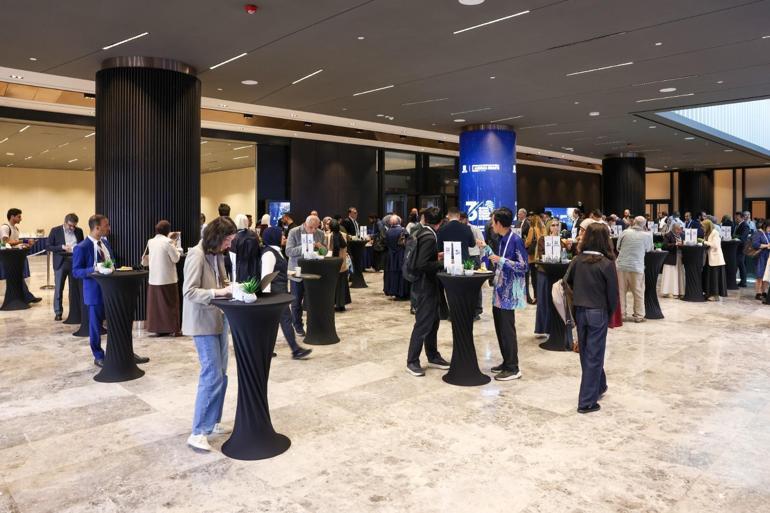
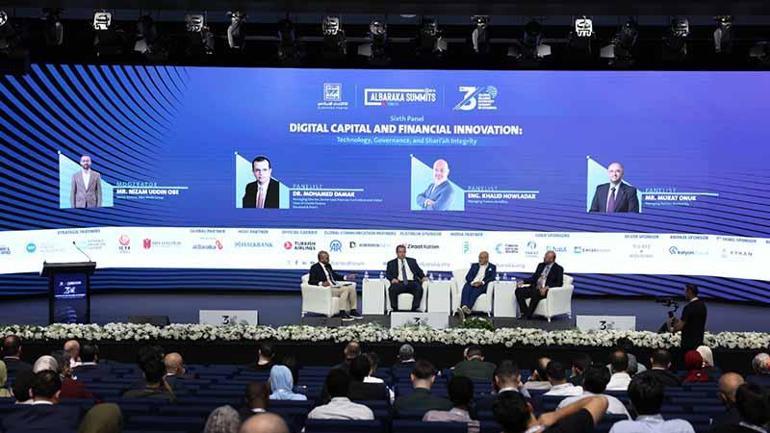
Held under the patronage of the Presidency of the Republic of Türkiye and organized by the AlBaraka Islamic Economy Forum, the 3rd Global Islamic Economy Summit successfully concluded at the Istanbul Financial Center following an intensive four-day program. Convened under the theme “Capital in Islamic Economics: Structuring Wealth for Sustainable Development,” the Summit brought together government officials, central bank governors, economic policymakers, investors, academics, financial institutions, entrepreneurs, and leading figures from the global business community on a single platform.
Throughout the four-day event, panels, strategic workshops, roundtable discussions, academic sessions, and high-level meetings explored the future of the Islamic economy, global capital flows, digital transformation, artificial intelligence, participation finance, sustainable development, the real economy, entrepreneurship, and international cooperation.
The overarching message emerging from the Summit was clear: in the face of growing global inequalities, increasing debt burdens, financial vulnerabilities, and development challenges, there is a greater need than ever for an economic model grounded in ethical values, focused on production, inclusive growth, and sustainability.
HIGH-LEVEL PARTICIPATION THROUGHOUT THE FOUR DAYS
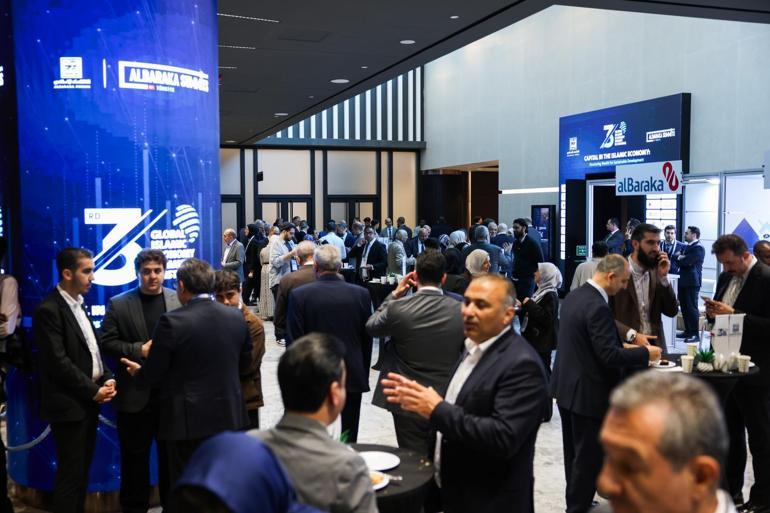
The 3rd Global Islamic Economy Summit attracted international attention not only through the topics discussed but also through its distinguished roster of participants.
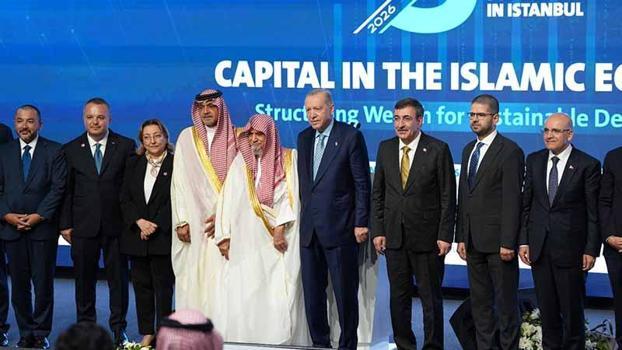
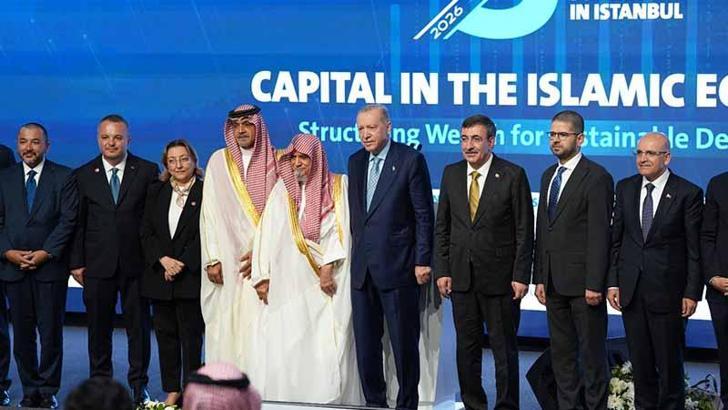
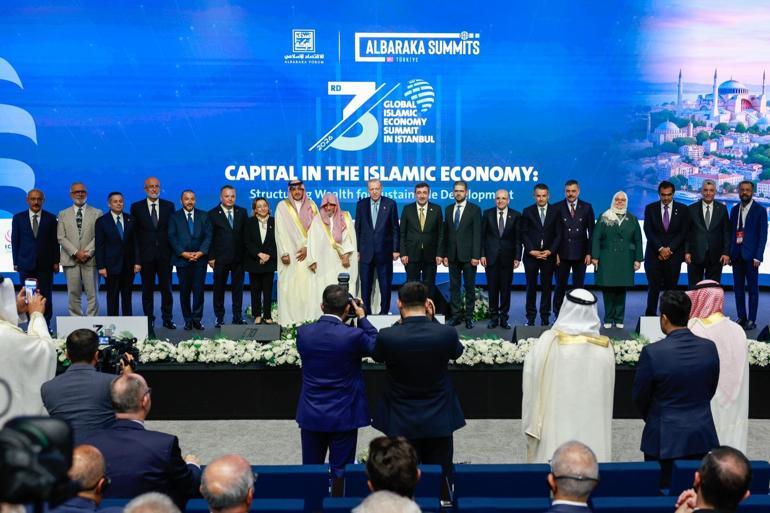
The third day of the Summit featured the Official Opening Ceremony attended by H.E. Recep Tayyip Erdoğan, President of the Republic of Türkiye. The ceremony was also attended by Abdullah Saleh Kamel, Chairman of the Board of Trustees of the AlBaraka Islamic Economy Forum; H.E. Sheikh Dr. Saleh bin Abdullah bin Humaid, Advisor to the Royal Court of Saudi Arabia and Imam of the Grand Mosque in Makkah; along with numerous international guests.
In his address, President Erdoğan emphasized the need for a more just, production-oriented global economic system rooted in moral values. Highlighting the principles of Islamic economics, he stated that “where there is interest, there can be no prosperity,” underscoring the growing global relevance of Islamic economic principles.
Delivering the opening speech, Abdullah Saleh Kamel stressed that Islamic economics is not merely a financial model but a comprehensive approach that contributes to social justice, sustainable development, and inclusive growth.
Kamel noted that Istanbul has historically served as a meeting point for trade, finance, and civilizations, and emphasized that Türkiye’s strategic role in Islamic economics and participation finance continues to strengthen year after year.
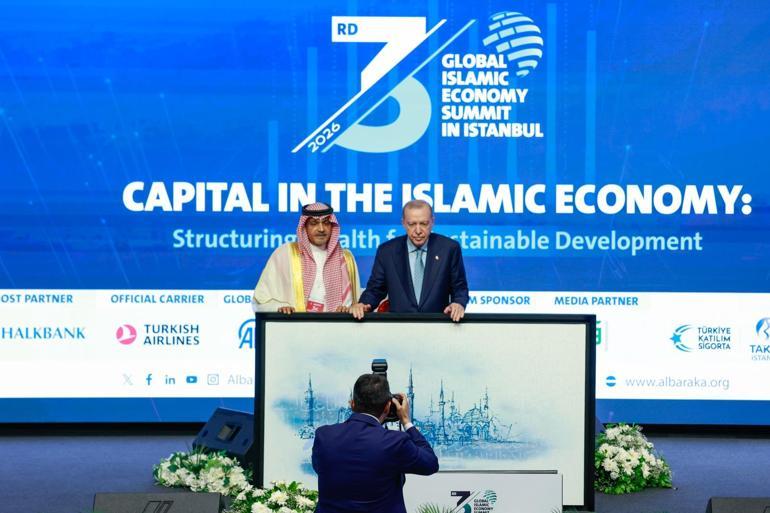
Addressing the ceremony, Sheikh Dr. Saleh bin Abdullah bin Humaid stated that economic development should not be assessed solely through financial indicators but also through ethical values, justice, and social responsibility. He highlighted the human-centered approach of Islamic economics and noted that sustainable prosperity can only be achieved through economic models supported by ethical principles.
As part of the ceremony, President Erdoğan was presented with a special gift by the Presidency Investment and Finance Office and the Türkiye Wealth Fund. Abdullah Saleh Kamel also presented a commemorative gift to President Erdoğan.
ISTANBUL BECOMES THE MEETING POINT OF THE GLOBAL ISLAMIC ECONOMY
The participation of prominent thought leaders from the Islamic world, including Abdullah Saleh Kamel and Sheikh Dr. Saleh bin Abdullah bin Humaid, at the official opening ceremony once again demonstrated the Summit’s international influence and significance within the global Islamic economy ecosystem.
Bringing together representatives from the worlds of economics, finance, academia, and religious thought, the Summit created a unique platform for interdisciplinary global dialogue.
By convening policymakers, financial leaders, investors, and think tanks from across the world in Istanbul, the Summit reaffirmed Türkiye’s strategic position within the global Islamic economy ecosystem.
Throughout the program held at the Istanbul Financial Center, participants discussed new ideas, policy recommendations, and partnerships that will shape the future of Islamic finance while highlighting Istanbul’s growing role as both a regional and global financial hub.
THE SUMMIT’S MAIN AGENDA: REDEFINING CAPITAL
At the heart of the Summit was the concept of “capital,” examined not only as a financial resource but also through the dimensions of human capital, knowledge, technology, entrepreneurship, social impact, and sustainable development.
During the sessions, participants emphasized that capital should be directed toward:
- Strengthening the real economy,
- Increasing productive capacity,
- Supporting SMEs,
- Enhancing infrastructure investments,
- Expanding social welfare,
- Empowering young entrepreneurs,
- Encouraging education and knowledge creation,
- Aligning with sustainable development goals.
Participants agreed that capital should be structured not only to generate growth but also to create social value and make development more inclusive.
A NEW ERA OF GROWTH FOR ISLAMIC FINANCE
One of the strongest messages emerging from the Summit was that Islamic finance continues to hold significant growth potential on a global scale.
Participants emphasized that Islamic finance offers important opportunities not only for Muslim societies but also for economies seeking ethical investment, sustainability, and inclusive development.
Discussions involving central bank governors, representatives of international financial institutions, and industry leaders focused on financial stability, liquidity management, capital mobility, cross-border cooperation, and economic resilience.
DIGITAL TRANSFORMATION AND ARTIFICIAL INTELLIGENCE AMONG THE SUMMIT’S DEFINING THEMES
From the first day to the last, digital capital, fintech solutions, digital assets, tokenization, AI-powered financial services, and the data economy ranked among the most extensively discussed topics.
Experts emphasized that artificial intelligence will have a transformative impact across a broad spectrum, from investment processes and risk management to Shariah compliance oversight and enhanced financial inclusion.
Sessions held on the final day explored the transformation of capital in the age of AI, digital currencies, digital financial infrastructures, Islamic fintech solutions, and the future of a Shariah-compliant digital finance ecosystem.
Participants agreed that digitalization represents not only a technological transformation but also a strategic opportunity to expand the reach of Islamic finance to broader audiences.
EMPHASIS ON SMEs, ENTREPRENEURSHIP, AND THE REAL ECONOMY
The final-day sessions highlighted the importance of channeling capital toward production and strengthening the real economy.
Access to finance for SMEs, the development of entrepreneurial ecosystems, sustainable business models, infrastructure investments, and support for young business leaders were identified as key pillars of economic development.
Participants noted that Islamic finance instruments could serve as a significant catalyst for increasing productive capacity, particularly in developing economies.
ETHICAL VALUES AND SOCIAL JUSTICE AS COMMON PRINCIPLES
One of the Summit’s most notable themes was the strong emphasis on the inseparable relationship between economic growth and ethical principles.
In remarks delivered by President Recep Tayyip Erdoğan, Bilal Erdoğan, Abdullah Saleh Kamel, and other international speakers, concepts such as justice, trust, responsibility, equitable distribution, and social benefit were highlighted as foundational pillars of Islamic economics.
Participants expressed a shared conviction that sustainable prosperity can only be achieved through economic systems supported by ethical principles.
NEW COOPERATIONS AND STRATEGIC PARTNERSHIPS
Throughout the Summit, various cooperation agreements and memoranda of understanding were signed among international institutions, laying the foundations for new partnerships between academic institutions, financial organizations, and international bodies.
Among the concrete outcomes of the Summit were agreements involving the General Council for Islamic Banks and Financial Institutions (CIBAFI), the OIC Arbitration Centre, the Saleh Kamel Islamic Economy Award, Istanbul Sabahattin Zaim University, Ibn Haldun University, and the Securities Commission Malaysia.
In addition, the AlBaraka Strategic Report was officially launched, providing the industry with a comprehensive reference framework on the future of the Islamic economy.
A GLOBAL GATHERING AT DOLMABAHÇE PALACE
On the evening of the Summit’s third day, a special Gala Dinner held at the Presidential Office of Dolmabahçe Palace brought together representatives of the global business community, public authorities, investors, and international guests.
Honored by the presence of Vice President Cevdet Yılmaz, the gala strengthened the international partnerships established throughout the Summit and contributed to the development of strategic relationships among participants from different countries.
Bringing together leading representatives of the global Islamic economy ecosystem at the historic Dolmabahçe Palace, the gala once again demonstrated the Summit’s international character and prestige.
A PLATFORM SHAPING THE FUTURE
The shared conclusion of the four-day program was that Islamic economics is no longer merely an alternative financial model. Rather, it represents a comprehensive approach that is becoming increasingly important for sustainable development, financial inclusion, ethical investment, and global economic resilience.
The 3rd Global Islamic Economy Summit in Istanbul served not only as a platform for discussing solutions to current economic challenges but also as a global meeting point where concrete ideas, strategic partnerships, and future visions for the architecture of the economy and finance of tomorrow were shaped.
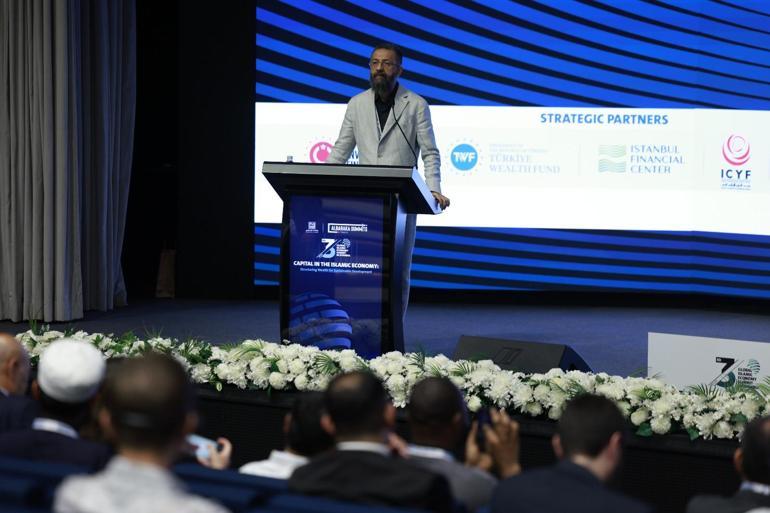
In his closing remarks, Yousef Hassan Khalawi, Secretary General of the AlBaraka Islamic Economy Forum, provided an overview of the four-day Summit and highlighted the success of the program. He noted that each year the Summit focuses on a different theme, explaining that this year’s discussions centered on capital, while next year’s edition will focus on Islamic investment and banking.
Khalawi emphasized that Islamic banking should not only be interest-free but should also avoid causing harm, adding that next year’s discussions will focus on how this objective can be achieved.
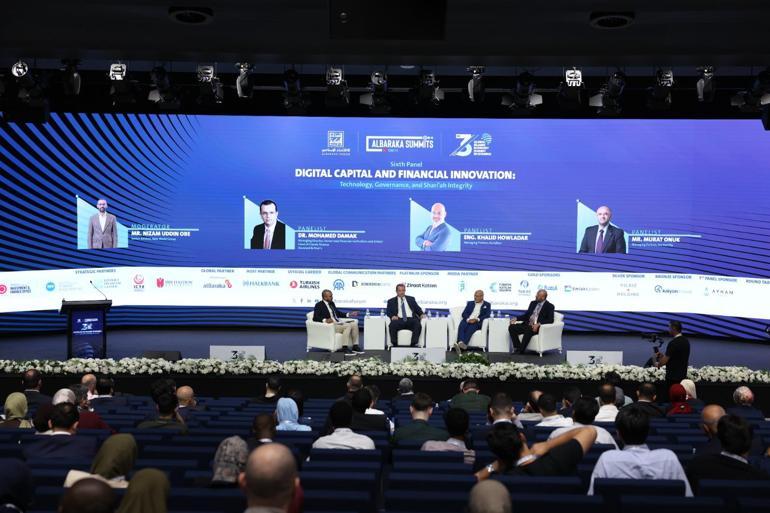
He further stated that, alongside the public panel discussions, specific issues were examined during closed-door roundtable meetings and that the outcomes of these discussions will be published in the near future.
Noting that each year the roundtables focus on different regions, Khalawi explained that this year’s discussions concentrated on Russia and Central Asia.
Expressing gratitude to the Summit’s partners and sponsors, Khalawi described the event as a highly successful gathering and invited all participants to return for next year’s Summit.
MADE POSSIBLE THROUGH THE SUPPORT OF STRONG STAKEHOLDERS
The 3rd Global Islamic Economy Summit was realized through a strong collaborative network comprising public institutions, financial organizations, academic institutions, and international bodies.
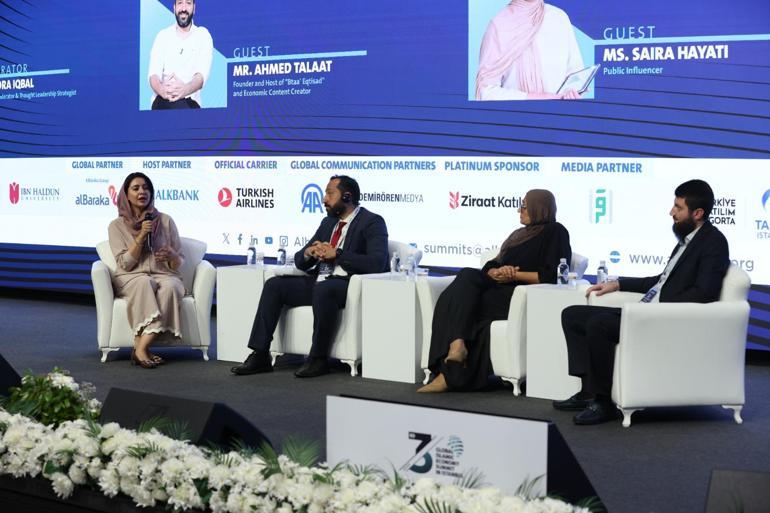
Representatives of the Presidency Investment and Finance Office, Türkiye Wealth Fund, Istanbul Financial Center, Islamic Cooperation Youth Forum (ICYF), and Ibn Haldun University participated as Strategic Partners. They were joined at the Gala Dinner by senior representatives from Global Partner AlBaraka Group, Host Partner Halkbank, Official Carrier Turkish Airlines, Global Communication Partners Anadolu Agency and Demirören Media, Platinum Sponsor Ziraat Participation Bank, Media Partner Iqraa, Gold Sponsors Türkiye Participation Insurance, Takas Istanbul, Fuzul and Emlak Participation Bank, Silver Sponsor Yıldız Holding, and Bronze Sponsor Kalyon Construction. Ayhan Law Firm participated as the Sponsor of the 7th Panel, while Halal 360 supported the Summit as the Roundtable Discussion Sponsor.
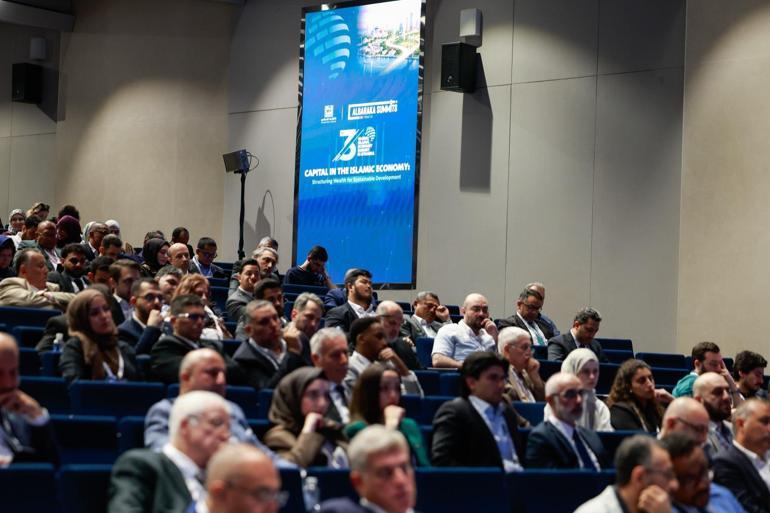
Thanks to this powerful stakeholder structure, which united the public sector, private sector, academia, and international organizations around a common vision, the 3rd Global Islamic Economy Summit concluded not merely as a platform for discussion but as a global meeting point where new partnerships were established, collaborative projects were initiated, and the future of the Islamic economy was shaped.